
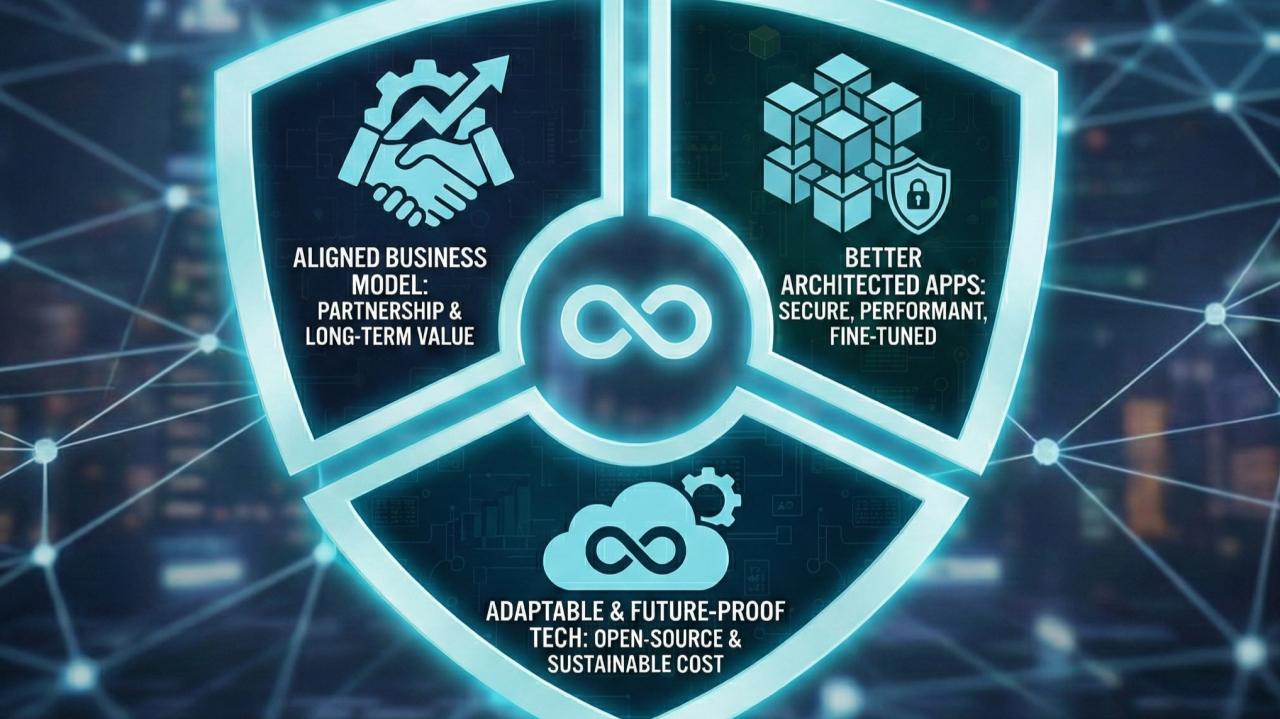
n the rapidly evolving landscape of enterprise software, the transition from proprietary silos to open-source ecosystems isn't just a trend—it's a strategic necessity. Slingr.io, a pioneer in the low-code space, is leading this charge by transforming its core engine from a closed-loop system into a high-performance open-source framework. This shift marks a departure from the citizen developer focus that has long dominated the low-code market. Instead, Slingr is doubling down on professional developers, integrating industry-standard tools like VS Code and AI-driven code agents to redefine how enterprise applications are built, secured, and scaled
1. The Developer Experience
From Locked-In to Plugged-In. For years, the trade-off for low-code speed was vendor lock-in and proprietary metadata that was impossible to debug or customize outside the vendor’s platform. Slingr’s new open-source framework dismantles this barrier. By moving the core builder features into a VS Code extension, Slingr meets professional developers where they already live. Rather than navigating a restrictive web UI, engineers can now use the full power of a professional IDE to manage application metadata.
Key Shifts for the Developer include:
Total Transparency. No more black boxes. Developers can inspect, version-control (Git), and extend the framework’s core logic.
AI-Native Workflow. The framework is built to work in tandem with GitHub Copilot and other AI agents. Because the framework leverages standard open-source patterns, AI agents can provide significantly more accurate code suggestions, unit tests, and refactoring advice.
Skill Portability. Developers no longer need to learn a Slingr-only skill set. They are working with leading open-source libraries, making their expertise transferable and future-proof.
2. The Applications
Architecture Without Compromise. When a platform generates proprietary metadata for a specific runtime, the resulting application is often limited by that runtime's performance and security patches. By transitioning to an open framework that integrates established open-source technologies, the applications themselves inherit best-in-class traits.
Robust Architecture and Security. The new framework replicates Slingr’s proven builder logic but outputs code that adheres to Solid Architecture principles.
Security. By utilizing community-vetted open-source frameworks, security vulnerabilities are identified and patched faster than any proprietary team could manage. Integrated security-as-code ensures that every app starts with a hardened baseline.
Speed and Performance. Applications are no longer burdened by the overhead of a generic, all-purpose runtime. The framework optimizes the generated code for high-performance execution, ensuring that enterprise-scale workloads remain snappy and responsive.
Adaptability. Since the underlying framework is open, developers can stray from standard patterns to build highly bespoke features without breaking the overall application structure.
3. The Customer
A New Era of Business Value. For the enterprise customer, the move to open source fundamentally changes the business relationship with Slingr. The old model was built on access to the platform; the new model is built on partnership and accelerated delivery.
The New Business Model. Slingr is moving from a gatekeeper model to an Enablement & Support model. Customers no longer pay just for the right to run their apps; they pay for:
Enterprise-Grade Support. Direct access to the architects of the framework to ensure mission-critical uptime.
Advanced Modules. While the core framework is open, Slingr will offer specialized, high-value pro extensions or managed hosting environments that simplify Day 2 operations.
Zero Risk of Obsolescence. If a customer decides to stop their subscription, they still own their code and the framework required to run it. This eliminates the platform risk that often keeps CTOs awake at night.
The goal isn't just to build apps faster; it's to build better apps that customers truly own.
The Future is OpenSlingr’s transformation is a signal to the industry: the era of proprietary, restrictive low-code is ending. By embracing the open-source community and the power of AI-assisted development, Slingr is empowering professional developers to build enterprise software that is faster, safer, and more adaptable than ever before. For developers, it means the end of plumbing and the beginning of pure problem-solving. For customers, it means total transparency and long-term stability. The low-code revolution has finally grown up.


.png)
.png)

.png)